






Property technology (PropTech) really took off in the mobile and broadband era, with the rise of listings companies such as RightMove. Today, it’s everywhere. A PropTech copywriter such as myself could be writing about anything from the way a prospective buyer views a property to real estate financing tools. PropTech is also about the actual buildings, from the design and construction stage through to the ways in which they can run themselves.
Here are a few pointers for effective PropTech copywriting, together with some samples from my own portfolio, from big names such as BT Intelligent Buildings through to niche providers such as MBA Software.
What makes PropTech copywriting different from general property copywriting?

PropTech copy usually has to offer a technology to a property-industry buyer (an agent, developer, or facilities manager). You’re not selling the dream so much as promising a better reality with solutions that are more accurate, accessible, practical, secure and so on.
That means your PropTech content needs enough tech fluency to be credible, but must also appeal to an audience that’s property-first (although not necessarily technically savvy themselves).
Writing for property visualisation and sales platforms
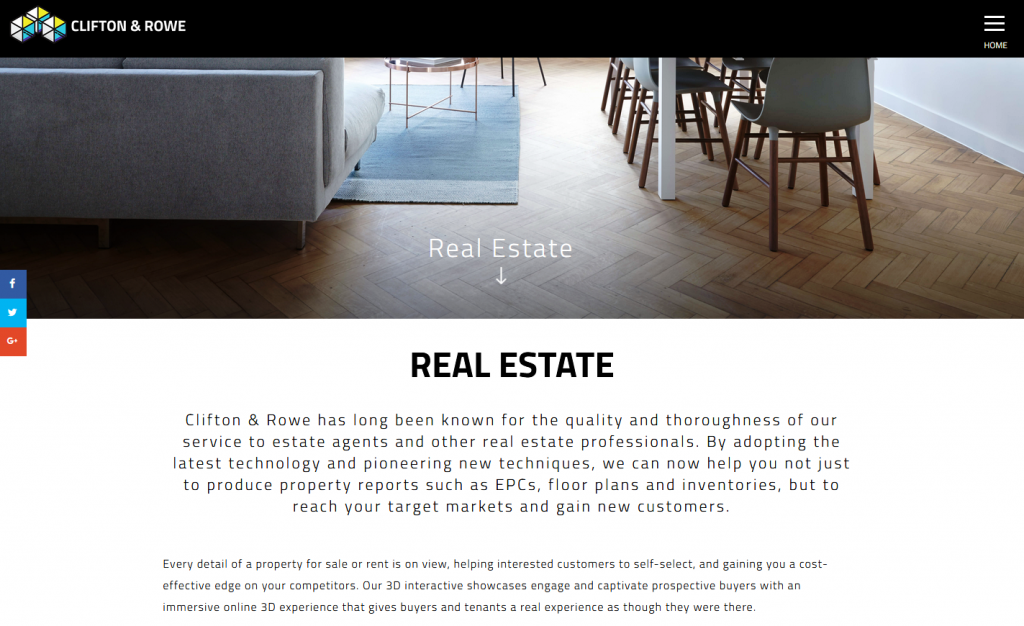
While the buyer or renter is rarely in the market for PropTech, it can be invaluable in showcasing a property, as with the 3D virtual reality tours that Clifton & Rowe offer, pictured above. Solutions like this not only make selling the dream easier, they can attract buyers who never even visit what they’re buying in advance, and change the whole nature of the sales conversation.
Back at the office, meanwhile, an SaaS platform such as the one shown for JuJu Suite in the previous section allows property developers and brokers to manage sales, present new developments, track negotiations and analyse sales data in real time.
Writing for technical and operational property software
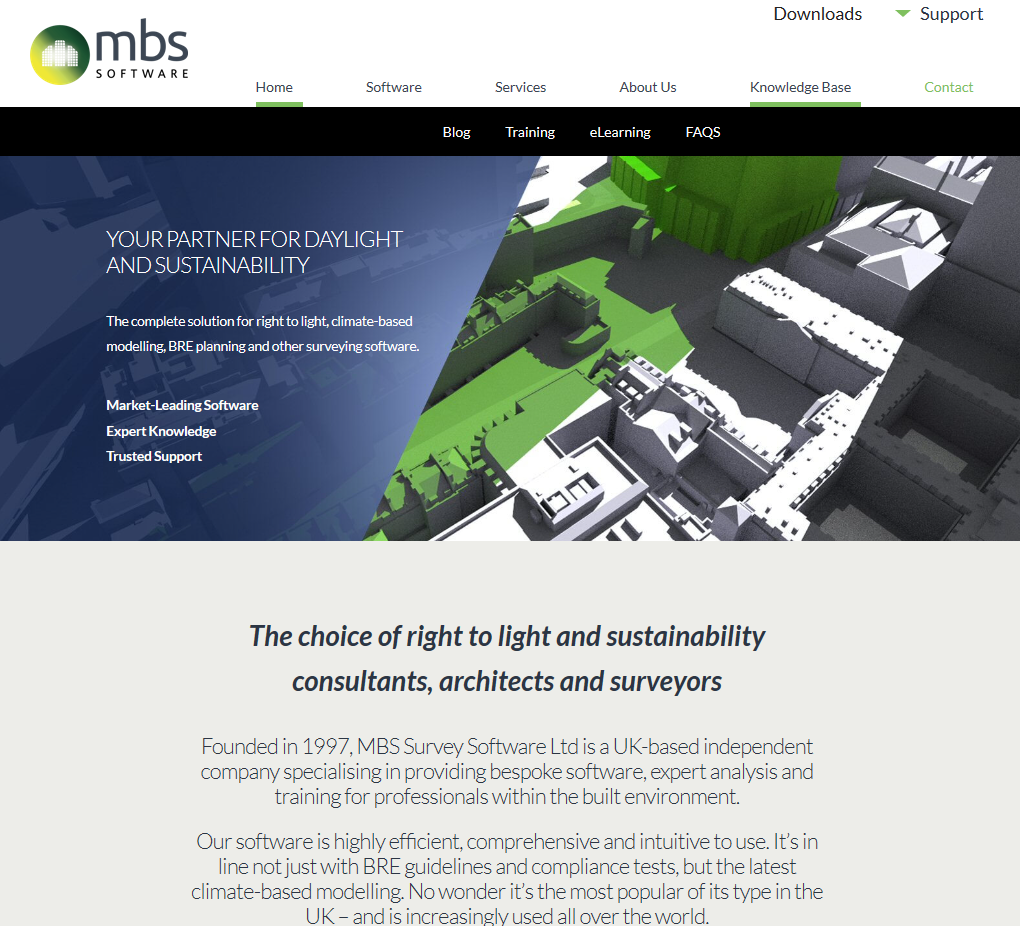
Precision back-office software for property professionals is now a PropTech staple. Examples include architectural and surveying tools, as with the MBS Software website I wrote, pictured here.
The job of the copy in instances like this is first to establish what it actually is and does, given the pioneering nature of many of these tools, including, of course, the key benefits. This should be followed by simple demonstrations of accuracy and reliability, and ensuring that any claims being made can be substantiated. Case histories and testimonials are invaluable here, using named individuals and companies if possible.
Writing for smart buildings and IoT
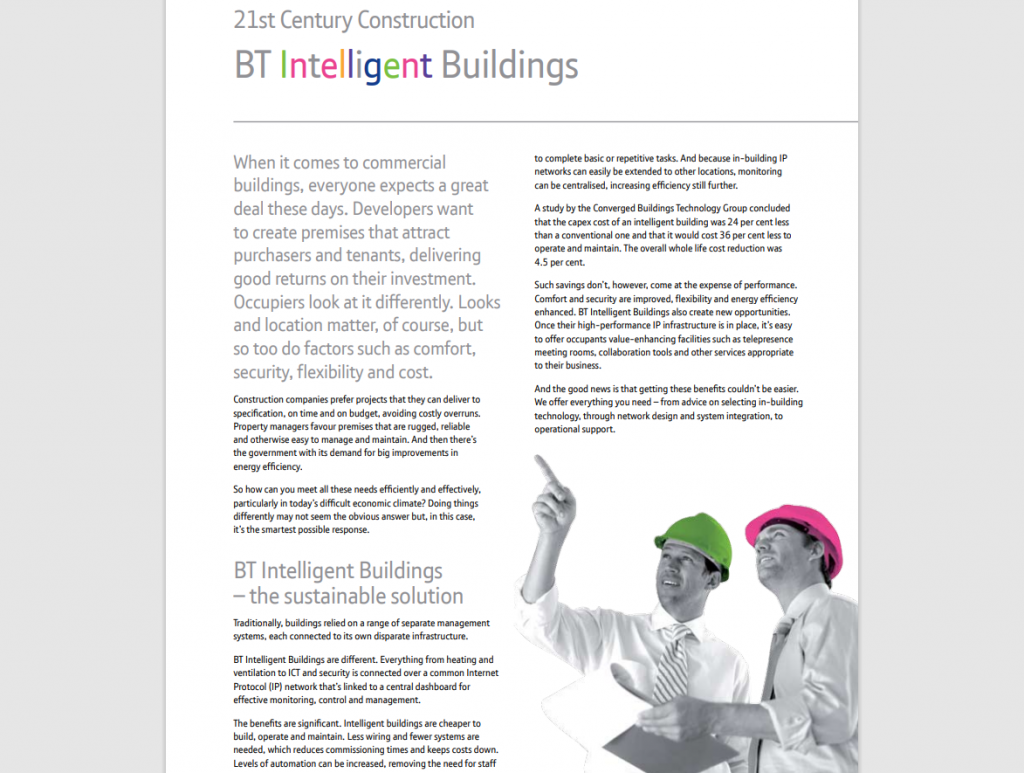
The newest and most technical corner of PropTech involves the properties themselves. Most modern buildings are now ‘smart’ to some extent, and applications and capabilities are expanding fast.
BT provides the digital backbone for many leading smart building providers. I’ve written a lot for the company across numerous areas, including the brochure shown above. The secret here, as I’ve reiterated throughout this article, is focusing on the benefits. You can see that network speeds, connections, sensors, data types and so on don’t get a look in – instead it’s all about security, cost savings and energy efficiency, as well as tenant comfort. Those are the kinds of factors that matter to property owners and facilities managers.
What do PropTech companies get wrong in their marketing copy?
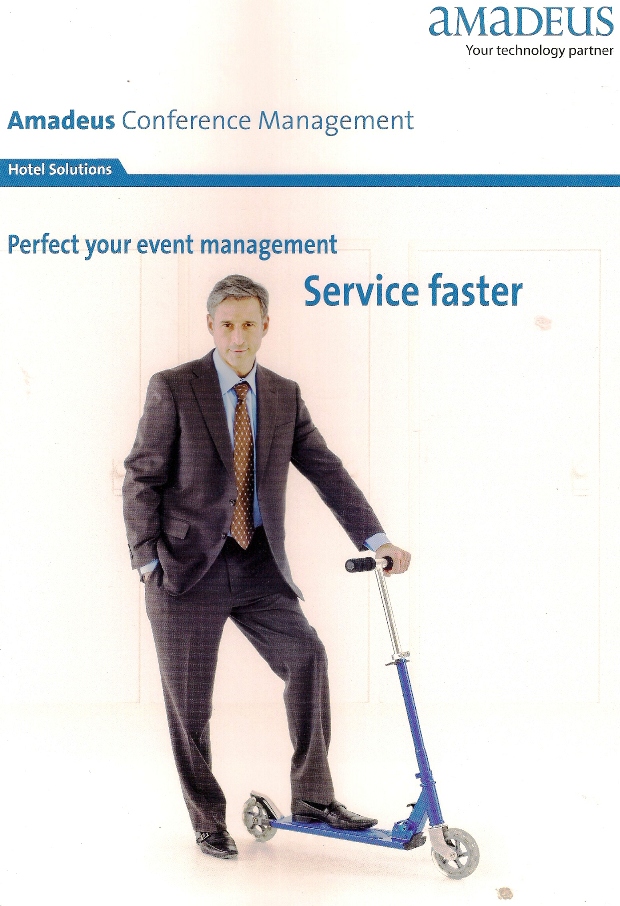
The commonest mistake that businesses make in their copy is overemphasising the tech specs and features. It’s true that specifications do matter, and that any potential buyer will need certain boxes ticked, but that’s not your priority for sales. What matters is the benefits. Can they do the job quicker, for example? Or more thoroughly, or with less risk, or more flexibility. And so on.
Companies such as Amadeus, meanwhile, offers specialized solutions for airport property management and hospitality operations. A good example of this is the hotel booking system brochure that I wrote, shown above, which dramatizes a key benefit.
How do you explain property technology to a non-technical buyer?
The emphasis on benefits applies even more when talking to a non-technical audience – the CFO or MD, for instance. Lead with the outcome – faster sales, lower running costs, better tenant experiences and so on. They’re not interested in the technology per se, just what it can do.
If the technical part is important, then diagrams or infographics can be a good idea and, on your website, simple explainer videos are even better.
Choosing a professional PropTech copywriter
Nowadays, many businesses enlist the aid of AI in writing copy, and PropTech marketing content is no different. However, with accuracy and trust being essential factors in this sphere, the results are rarely as good as they could be, however detailed and thought-out the prompts.
There’s also the issue of humanity and persuasion. If readers think that what they are reading has just been pumped out by a machine (and they’ll usually know if it has), they may wonder how innovative and trustworthy the solution is, given the second-rate nature of the marketing.
It’s often better to choose a professional Proptech copywriter such as myself, who also has experience in both wider tech copywriting and property copywriting of all kinds If you’d like a free, no-obligation quote, then please contact me now







Share this: